Have you noticed your air conditioner running, but the air coming out feels weak or warm because the unit is covered in ice? If you are wondering how to stop air conditioner from freezing up, the good news is that this common problem usually has a simple cause and can often be fixed without replacing the system. A frozen AC can waste energy, reduce comfort, and damage important components if ignored. Understanding the causes and fixes can help you restore cooling fast and prevent the problem from coming back.
Why Air Conditioners Freeze Up
An air conditioner freezes when moisture on the evaporator coil turns to ice instead of draining away properly. This usually happens when the coil gets too cold due to low airflow or low refrigerant levels. In many cases, the problem starts small and gets worse over time. If you want to know how to stop air conditioner from freezing up, the first step is identifying what is making the coil drop below freezing.
Dirty Air Filter
A clogged air filter is one of the most common reasons an AC freezes up. When airflow is restricted, warm air cannot pass over the evaporator coil as it should. That causes the coil temperature to fall too low and ice begins to form.
Blocked Vents or Registers
Closed vents, blocked return grilles, or furniture placed in front of airflow outlets can also limit circulation. Poor airflow makes it harder for the system to absorb heat, which can lead to frozen coils and reduced cooling performance.
Low Refrigerant
Low refrigerant is another major cause of a freezing air conditioner. When refrigerant levels are too low, pressure drops inside the system and the coil becomes colder than normal. This often requires professional AC repair because refrigerant issues usually mean there is a leak.
Dirty Evaporator Coils
Dust and debris on the evaporator coil can insulate the surface and prevent proper heat transfer. As a result, the coil may get too cold and freeze. Regular AC maintenance helps prevent this issue.
How to Stop Air Conditioner From Freezing Up
Replace the Air Filter
Check your air filter every month during peak cooling season. If it looks dirty, replace it right away. A clean filter improves airflow and helps prevent the evaporator coil from icing over. This is one of the easiest ways to stop an air conditioner from freezing up.
Open Vents and Improve Airflow
Make sure supply vents and return vents are open and unobstructed. Move rugs, curtains, or furniture away from vents so air can move freely through the home. Better airflow reduces strain on the system and supports proper cooling.
Turn Off the AC and Let It Thaw
If you already see ice on the indoor unit or refrigerant lines, turn off the cooling system and switch the fan to on. This helps melt the ice faster. Do not keep running the AC while it is frozen because that can damage the compressor.
Clean the Coils
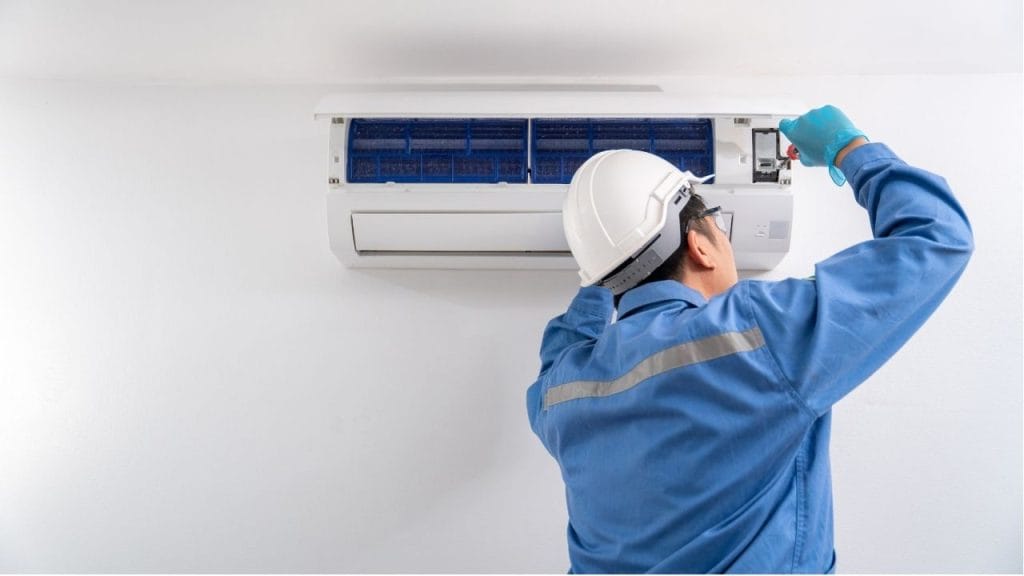
If the coils are dirty, gently clean them with an appropriate coil cleaner or have a technician do it during routine service. Clean coils allow the system to transfer heat properly and lower the risk of freezing.
Check for Refrigerant Problems
If the unit keeps freezing even after airflow issues are corrected, low refrigerant may be the cause. Because refrigerant leaks require special tools and handling, a licensed HVAC technician should inspect and repair the system.
How to Prevent AC Freezing in the Future
Schedule annual HVAC maintenance to keep the system running efficiently. Regular tune-ups can catch airflow issues, coil dirt, and refrigerant problems before they cause a frozen AC. You should also keep the thermostat set at a reasonable temperature and avoid running the system with dirty filters for long periods.
When to Call an HVAC Technician
If your air conditioner freezes repeatedly, blows warm air, or makes unusual noises after thawing, it is time to call a professional. Persistent freezing often points to a deeper mechanical problem that DIY fixes cannot solve.
Knowing how to stop air conditioner from freezing up can save you money, improve comfort, and extend the life of your cooling system. Start with airflow, clean filters, and basic maintenance, then contact an HVAC professional if the issue keeps coming back.