Have you ever noticed your AC blowing warm air while ice forms on the indoor unit or refrigerant lines? If so, you may be dealing with a frozen system. Learning how to unfreeze an air conditioner can help restore cooling, prevent damage, and keep your home comfortable during hot weather.
Why an Air Conditioner Freezes Up
An air conditioner can freeze for several reasons, and the most common is restricted airflow. When warm air cannot move properly across the evaporator coil, the coil temperature drops too low and moisture turns to ice. Other causes include low refrigerant levels, dirty air filters, blocked vents, faulty blower fans, and clogged condensate drains.
If your system is frozen, do not keep running it. This can strain the compressor and lead to expensive repairs. Instead, follow the steps below to safely thaw your AC unit.
Step-by-Step Guide on How to Unfreeze an Air Conditioner
1. Turn Off the AC System
Start by turning off the cooling mode at the thermostat. For extra safety, shut off power to the air conditioner at the circuit breaker or outdoor disconnect switch. This stops the system from making the freezing worse and allows the ice to melt naturally.
2. Switch the Fan to On
Set your thermostat fan to the “On” position instead of “Auto.” This helps circulate room-temperature air over the frozen evaporator coil and speeds up the thawing process. Keep the cooling mode off while the fan runs.
3. Check and Replace the Air Filter
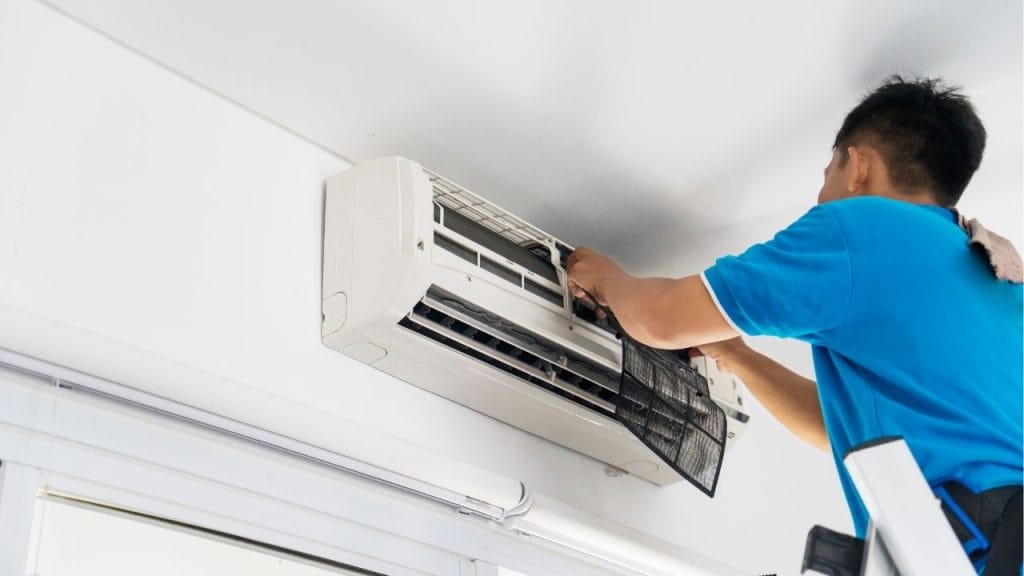
A dirty air filter is one of the most common reasons an AC unit freezes. Remove the filter and inspect it for dust and debris. If it looks clogged, replace it with a clean filter. A fresh filter improves airflow and may prevent future freezing.
4. Inspect the Vents and Registers
Make sure supply and return vents are open and not blocked by furniture, curtains, or rugs. Poor airflow can cause the air conditioner to freeze again even after thawing. Walk through your home and clear any obstructions around vents.
5. Let the Ice Melt Completely
Depending on the amount of ice buildup, thawing may take several hours or longer. Do not chip away at the ice with sharp objects, since that can damage the coils or refrigerant lines. You can place towels around the unit if water begins to drip.
6. Clean the Condensate Drain Line
A clogged drain line can contribute to moisture buildup and freezing. Once the unit is thawed and powered off, check for standing water or visible blockages near the drain pan. If needed, flush the line with warm water or use a wet/dry vacuum to remove debris.
7. Restart the System Carefully
After the ice is gone, turn the AC back on and monitor it closely. If airflow seems weak or the coil starts freezing again, there may be a deeper issue such as low refrigerant, a failing blower motor, or a dirty evaporator coil.
When to Call an HVAC Technician
If your air conditioner keeps freezing, the problem may be beyond a simple fix. Contact a licensed HVAC technician if you notice repeated ice buildup, hissing sounds, weak airflow, or warm air even after replacing the filter. Low refrigerant or mechanical problems require professional repair.
How to Prevent an AC from Freezing Again
To avoid future freeze-ups, change your air filter regularly, keep vents open, schedule seasonal maintenance, and have your system inspected before peak summer use. Routine tune-ups can catch airflow problems and refrigerant issues early.
Knowing how to unfreeze an air conditioner can save time, reduce stress, and protect your cooling system. With the right steps, you can thaw the unit safely and determine whether the issue is a simple airflow problem or a sign that professional service is needed.
To effectively address a frozen AC system, it's essential to understand how to unfreeze air conditioner coils, as this can prevent recurring issues and ensure efficient operation.
While knowing how to unfreeze an air conditioner is essential for quick repairs, understanding the reasons that lead to freezing helps address the underlying issues effectively.