Did you know that running your ceiling fan in winter can help you feel warmer without touching your thermostat? Many homeowners assume ceiling fans are only useful in summer, but the truth is that the right winter ceiling fan direction can improve comfort, reduce cold spots, and even help lower heating costs.
How to Run Ceiling Fan in Winter
To get the most out of your ceiling fan in winter, you need to reverse the direction of the blades. In the colder months, your ceiling fan should rotate clockwise at a low speed. This creates an updraft that gently pulls cool air upward and pushes the warm air near the ceiling back down along the walls.
This simple change helps distribute heat more evenly throughout the room. Since warm air naturally rises, reversing ceiling fan direction in winter prevents heat from getting trapped at the top of the room where you cannot feel it.
What Direction Should a Ceiling Fan Spin in Winter?
The correct ceiling fan direction in winter is clockwise when you look up at it from below. Most ceiling fans have a small reverse switch on the motor housing that lets you change the blade direction.
If your fan has a remote or wall control, check the manual because some models let you reverse the direction electronically. Once switched, set the fan to a low speed so it circulates air without creating a strong breeze.
How to Check the Fan Direction
Stand directly under the fan and watch the blades. In winter mode, they should move clockwise. A good way to confirm is to feel for a gentle updraft rather than a downward wind.
Why Use a Ceiling Fan in Winter?
Using a ceiling fan in winter can make your heating system work more efficiently. Instead of forcing the furnace to overcompensate for uneven temperatures, the fan helps spread warm air around the room.
Here are the biggest benefits:
- Improves air circulation in winter
- Reduces hot and cold spots
- Helps rooms feel warmer faster
- May support lower heating bills
- Makes your space more comfortable overall
This is especially useful in rooms with high ceilings, open floor plans, or areas where heat tends to collect near the ceiling.
Ceiling Fan Winter Settings for Best Results
The best ceiling fan winter setting is clockwise rotation on the lowest speed. High speeds are not necessary and may make the room feel drafty instead of warmer.
Best Practices for Winter Fan Use
- Use the reverse switch to change the fan direction
- Keep the fan on low speed
- Turn it off when the room feels evenly warm
- Use it in occupied rooms for the best comfort
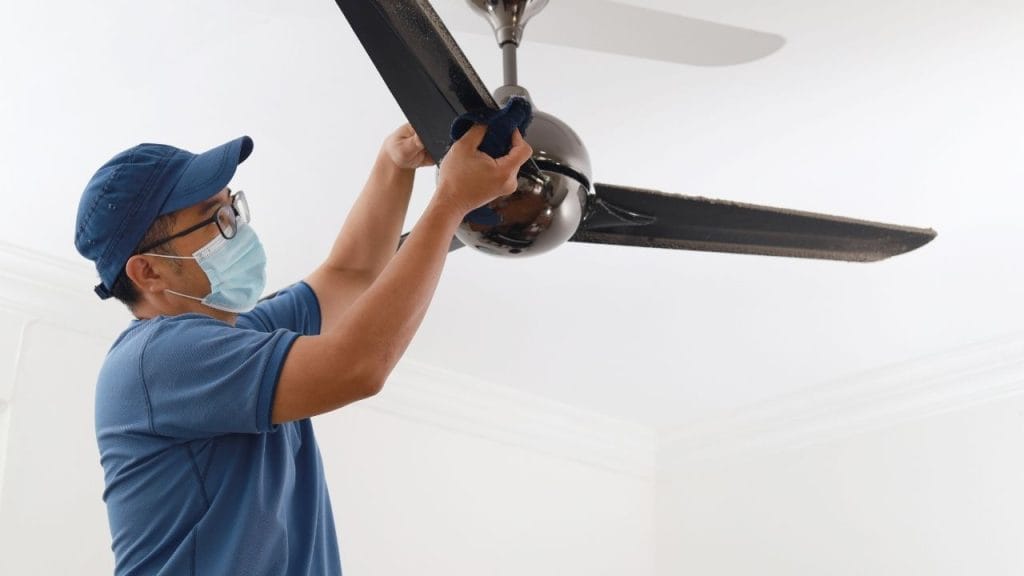
- Make sure the fan blades are clean for efficient airflow
If you have multiple ceiling fans in the house, adjust each one to match the season. This is an easy home comfort habit that can make a noticeable difference.
Does Running a Ceiling Fan in Winter Save Money?
A ceiling fan does not create heat, but it can help your home feel warmer by redistributing existing warm air. Because of that, you may be able to turn your thermostat down a few degrees and still stay comfortable.
Even a small thermostat adjustment can lead to energy savings over time. The exact amount depends on your home, insulation, and heating system, but winter fan use is generally a smart and low-cost efficiency upgrade.
Common Mistakes to Avoid
One of the most common mistakes is leaving the fan in summer mode during winter. If the blades spin counterclockwise, the fan pushes air downward and can make the room feel colder.
Another mistake is running the fan too fast. In winter, the goal is gentle circulation, not a cooling breeze. Also, do not assume every fan has the same reverse method. Always check the manufacturer’s instructions before adjusting settings.
Final Thoughts
Learning how to run ceiling fan in winter is one of the easiest ways to improve home comfort during cold weather. Just switch the ceiling fan direction to clockwise, keep it on low speed, and use it to circulate warm air more effectively.
This small seasonal adjustment can help your rooms feel cozier, reduce uneven temperatures, and make your heating system work smarter. If you want a simple winter home improvement with real benefits, your ceiling fan is a great place to start.