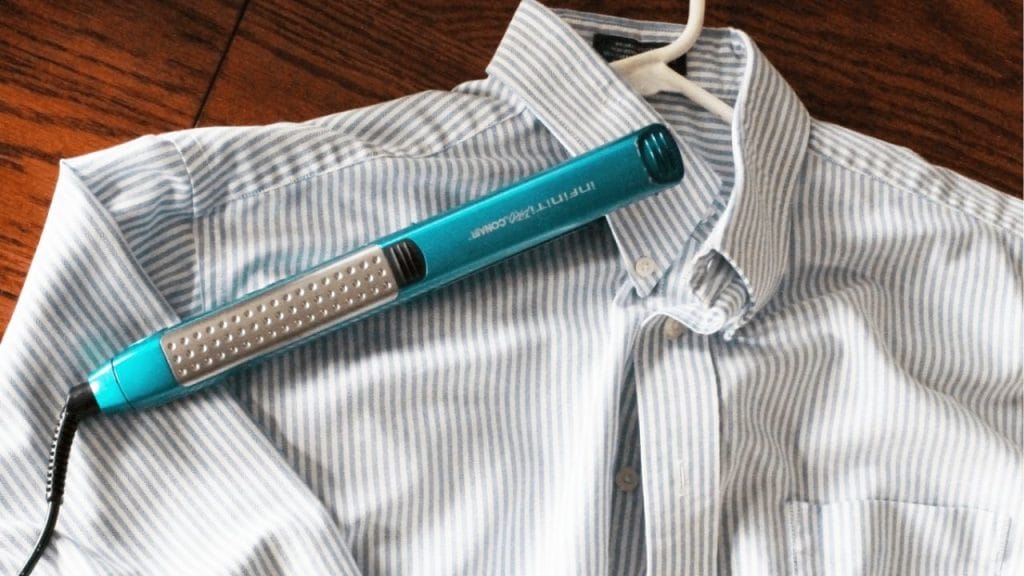
Can a hair straightener really save your outfit when you do not have an iron nearby? Yes, in a pinch, it can help remove light wrinkles from small clothing areas. If you are wondering how to use a hair straightener to iron clothes safely and effectively, this guide covers everything you need to know.
When to Use a Hair Straightener for Clothes
A hair straightener is not a replacement for a real clothes iron, but it can work well for quick touch-ups. It is best for collars, cuffs, hems, shirt plackets, and other small fabric sections. This method is especially useful when traveling, getting ready for work, or dealing with a last-minute wardrobe issue.
Best Fabrics for This Method
Use extra caution and only apply this trick to durable, heat-safe fabrics like cotton, polyester blends, and denim in small areas. Always check the garment care label before you begin. Avoid delicate materials such as silk, satin, lace, rayon, and wool unless the label specifically allows low heat.
How to Use a Hair Straightener to Iron Clothes
Start by plugging in the straightener and setting it to the lowest heat level that can still smooth wrinkles. Let it fully heat up. Make sure the plates are clean, since any product buildup can stain your clothing.
Next, lay the clothing on a flat, hard surface. Smooth the wrinkled area with your hand. For better results, place a thin cotton cloth, like a handkerchief or pillowcase, between the hair straightener and the fabric. This creates a protective barrier and lowers the risk of scorching.
Then, clamp the straightener over the wrinkled section for just a few seconds. Move slowly and gently, using short passes instead of holding it in one place. Repeat only if needed. For seams, collars, and sleeves, work in small sections to avoid overheating.
Once the wrinkles are gone, let the fabric cool before wearing or folding it. This helps the smooth finish last longer.
Tips for Better Results
For the best outcome, lightly mist the garment with water if the fabric allows it. Slight moisture can help release wrinkles more easily. If you are using a steam hair straightener, be careful not to over-wet the fabric.
Always test the straightener on an hidden area first, especially if the item is dark, synthetic, or expensive. Keep the tool moving and never press hard. A gentle touch is safer and usually more effective.
Safety Tips to Avoid Damage
Using a hair straightener on clothes comes with a few risks, including burns, shine marks, melting, or fabric distortion. To reduce damage, never use high heat on sensitive fabrics. Do not use the straightener on clothing with plastic prints, rhinestones, or adhesive decorations.
Also, avoid using a dirty or oily straightener, since residue can transfer to the garment. If your straightener has adjustable temperature settings, choose the lowest practical setting first and increase only if necessary.
When You Should Not Use This Trick
Do not use a hair straightener on heavily wrinkled garments that need full ironing. It is also not ideal for large items like dresses, pants, or curtains. In those cases, a traditional iron or garment steamer will give better results and be safer for the fabric.
Final Thoughts
Learning how to use a hair straightener to iron clothes can be a helpful backup solution for quick wrinkle removal. With the right heat setting, a protective cloth, and careful handling, you can smooth small areas fast without ruining your outfit. Just remember that this method works best as a temporary fix, not a full replacement for an iron.