Have you noticed your air conditioner running longer than usual but still not cooling your home properly? One of the most common reasons is low refrigerant. If you are trying to figure out how to tell if air conditioner is low on refrigerant, there are several warning signs that can help you spot the problem before it leads to bigger AC issues.
What Refrigerant Does in an Air Conditioner
Refrigerant is the substance that absorbs heat from inside your home and releases it outside. It cycles through your AC system in a closed loop, so under normal conditions it should not get used up. If your air conditioner is low on refrigerant, it usually means there is a leak somewhere in the system. That is why symptoms often get worse over time.
Common Signs Your Air Conditioner Is Low on Refrigerant
Warm Air Coming From the Vents
If your AC is blowing warm or room-temperature air instead of cool air, low refrigerant may be the cause. The system cannot absorb enough heat from your indoor air, which reduces cooling performance.
Weak Airflow and Poor Cooling
A low refrigerant charge can make your air conditioner struggle to cool the house evenly. You may notice weak airflow, hot spots in certain rooms, or the system running constantly without reaching the set temperature.
Ice Building Up on the Refrigerant Lines or Evaporator Coil
One of the clearest signs of low refrigerant in an AC unit is ice on the copper refrigerant lines or indoor evaporator coil. When refrigerant levels drop too low, pressure changes can cause the coil to freeze. If you see ice, turn the system off and call a professional.
Hissing or Bubbling Noises
If you hear hissing, bubbling, or gurgling sounds coming from your AC, refrigerant may be leaking. These noises often happen when refrigerant escapes through a small crack or hole in the lines.
Higher Energy Bills
When your air conditioner is low on refrigerant, it has to work harder and run longer to cool your home. That extra strain can lead to a noticeable increase in your electricity bill.
Longer Cooling Cycles
An AC system with low refrigerant often takes much longer to cool your home. If your unit seems to run nonstop or cycles more often than usual, it is worth checking for a refrigerant problem.
How to Confirm Low Refrigerant in an AC System
Check for Visible Signs
Start by looking for ice on the coils, water around the unit from thawing ice, or oily residue near refrigerant lines. Oil stains can point to a refrigerant leak.
Compare Cooling Performance
If your thermostat is set correctly but the house still feels warm, the system may not be cooling efficiently because of low refrigerant.
Call an HVAC Professional
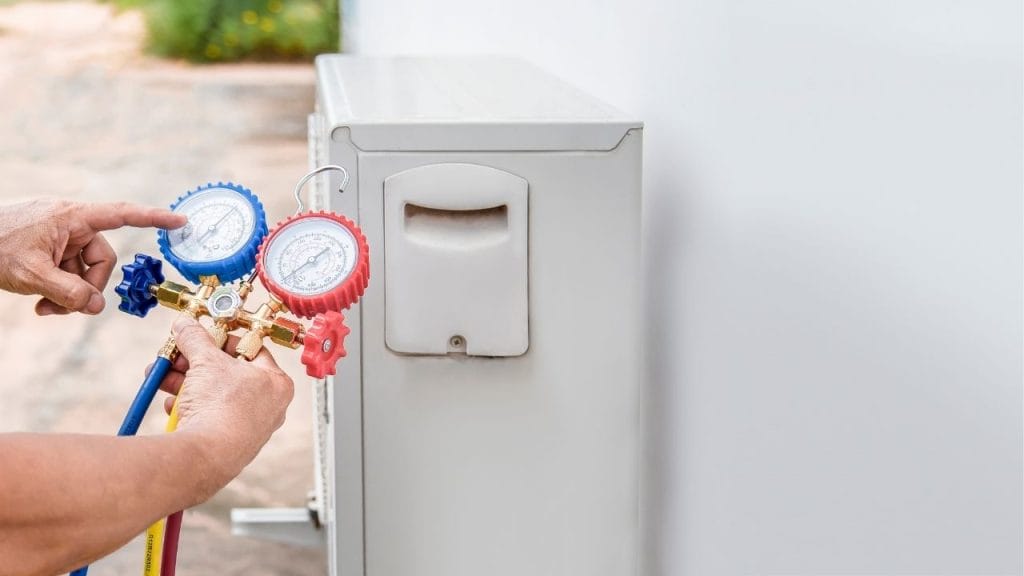
The safest and most accurate way to confirm low refrigerant is to have an HVAC technician inspect the system. They can measure pressure levels, locate leaks, and recharge the refrigerant if needed.
Why You Should Not Ignore Low Refrigerant
Running an air conditioner with low refrigerant can damage the compressor, reduce energy efficiency, and shorten the life of the system. It can also turn a small leak into a more expensive repair. If you suspect a refrigerant issue, it is best to act quickly.
Final Thoughts
Knowing how to tell if air conditioner is low on refrigerant can help you catch problems early. Warm air, weak airflow, ice buildup, strange noises, and rising energy bills are all signs to watch for. If you notice one or more of these symptoms, contact a licensed HVAC technician to inspect your system and restore proper cooling.