Have you ever wondered why your air conditioner hums but does not start, or why the fan runs weakly on a hot day? In many cases, the problem comes down to a bad capacitor. Learning how to test air conditioner capacitor can help you diagnose common AC issues before calling a technician.
What Is an Air Conditioner Capacitor?
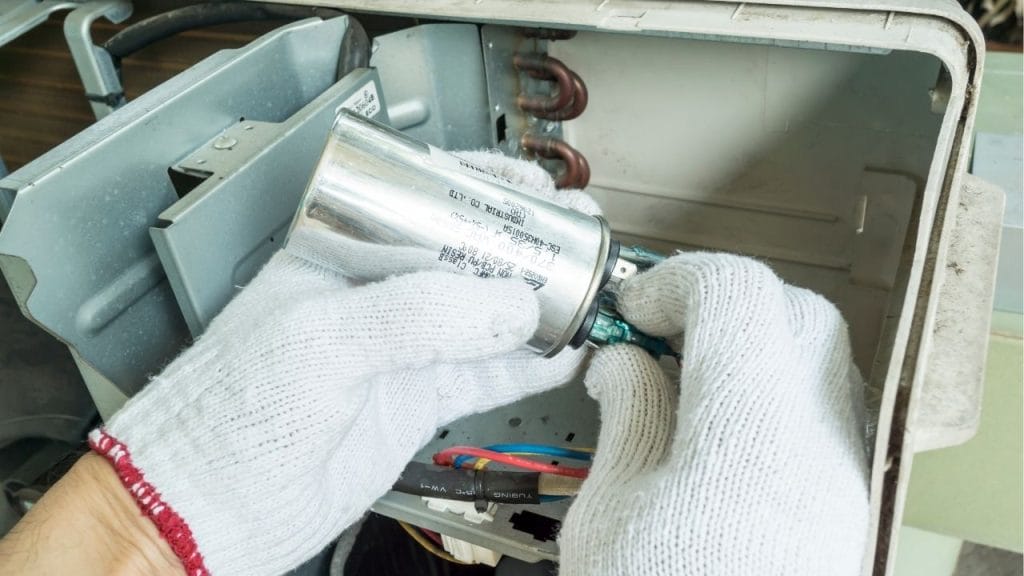
An air conditioner capacitor is a small cylindrical component that stores and releases electrical energy to help start and run the compressor and fan motor. If it fails, your AC may struggle to start, blow warm air, trip breakers, or make unusual humming noises.
Understanding how to test an air conditioner capacitor is useful for spotting whether the part is still working or needs replacement.
Safety First Before Testing
Turn off all power
Before you test AC capacitor components, shut off power at the thermostat, the indoor unit, and the outdoor disconnect box. Never work on a live AC system.
Discharge the capacitor
Even with the power off, a capacitor can hold a dangerous electrical charge. Use an insulated screwdriver with a resistor, or follow the manufacturer’s discharge procedure to safely release stored energy.
Use the right tools
You will need:
- A digital multimeter with a capacitance setting
- Insulated gloves
- Screwdriver
- Safety glasses
How to Test Air Conditioner Capacitor with a Multimeter
Step 1: Remove the access panel
Open the outdoor unit panel to reach the capacitor. Take a photo of the wiring first so you can reconnect everything correctly later.
Step 2: Inspect the capacitor
Look for signs of damage such as:
- Bulging top
- Leaking fluid
- Rust or corrosion
- Burn marks
If you notice any of these, the capacitor is likely bad and should be replaced.
Step 3: Disconnect the wires
Carefully remove the wires from the capacitor terminals. Handle each wire by the connector, not the wire itself.
Step 4: Set your multimeter
Turn your multimeter to the capacitance setting, usually marked with a symbol like “μF” or “MFD.” If your meter does not have this setting, you may need a different test method or professional help.
Step 5: Measure the capacitor
Place the multimeter probes on the correct terminals. For dual run capacitors, test each section separately:
- C to FAN for the fan motor
- C to HERM for the compressor
Wait for the reading to stabilize.
Step 6: Compare the reading
Check the capacitor’s label for its rated microfarad range. A healthy capacitor should read within about 6 percent of the rated value, though some units allow a slightly wider tolerance.
If the reading is far below the rating, zero, or inconsistent, the capacitor is failing.
Signs Your AC Capacitor Is Bad
A failed capacitor often causes symptoms like:
- AC unit not starting
- Fan running slowly
- Compressor not turning on
- Humming sound from the outdoor unit
- System shutting off unexpectedly
If you notice these issues, testing the capacitor is one of the first troubleshooting steps.
Should You Replace It Yourself?
If you are comfortable with basic electrical work and follow all safety steps, replacing a capacitor can be a manageable DIY repair. However, if the capacitor tests fine and the problem continues, the issue may be with the compressor, fan motor, contactor, or control board.
When in doubt, call a licensed HVAC technician. Air conditioning systems contain high-voltage components, and safety should always come first.
Final Thoughts
Knowing how to test air conditioner capacitor can save time and help you identify one of the most common AC failures. With a multimeter, proper safety precautions, and a little patience, you can determine whether the capacitor is the source of the problem and decide on the next repair step.